Thanks for joining us at the Crocker Art Museum for Visual Acoustics

Introductions by Ian Merker, AIACV and Gretchen Steinberg, SacMod

Many, many thanks for those of you who joined us at the successful screening of Visual Acoustics at the Crocker Art Museum on Thursday, April 7, 2011. We were pleased and humbled to see the event almost sold out. Thanks to the Crocker Art Museum for collaborating with AIACV and SacMod and letting us use their new and beautiful state-of-the-art venue. Thanks also to Director Eric Bricker for making his wonderful film (his first!) and taking the time out of his busy schedule to join us.

Our educational display with photos taken by Julius Shulman in Sacramento
Eric Bricker, Director of Visual Acoustics and Gretchen Steinberg, SacMod
Dane Henas from SacMod being goofy -- doing his best Vanna White impression, ha ha!

We presented an educational display with several photos that Julius Shulman took in Sacramento in the early 1960s. We decided to seek them out and research them at the last minute so people could enjoy a special connection with him in our town. Many thanks to historian John Crosse (who was also a researcher for Visual Acoustics), JW and B for their contributions to our educational display. Thanks also to Ian Merker from AIACV (our colleague and co-presenter extraordinaire) for printing the images and providing the materials to display the images. Special thanks also to our former SacMod colleague Kris Lannin Liang who had to move away from Sacramento but initially worked on this event.

Jerry Blomberg and Dane Henas with an original copy of an ad featuring Jerry's Sacramento home

My favorite Shulman pictures taken in Sacramento are of a home in South Land Park Estates; these were featured in a 1961 ad for American Saint Gobain glass. The home was collaboratively designed by homeowner Jerry Blomberg and George Muraki, with George Muraki being the architect on record. Last year we printed the ad we had researched for the Sacramento Mid-Century Modern Home Tour display. Little did we know at the time that the images were taken by Julius Shulman. I invited Mr. Blomberg to join us at the event and was so pleased to see him show up -- with his own copy of the ad and another magazine article that I had been looking for but was unable to find in time!

Director Eric Bricker leading a post-screening discussion

Here are more photos taken at the event. Thanks again to everyone who made the event possible; and a shout-out to Midtown Monthly and to Sacramento area bloggers Davis Life Magazine, Mimomito, Rebecca Crowther of Sac History Happenings (Sacramento Bee), Capitol Creative Collective, Glitter and Grunge and our Twitter friends for helping spread the word.


Did you know that Julius Shulman photographed several Sacramento buildings?

We will be sharing some of these photographs with you in person at Crocker Art Museum's Film Frame: Visual Acoustics this Thursday evening. My favorite photos of the bunch are of a residence designed by Sacramento architect George Muraki for the Blomberg family. You may recall that Mr. Muraki's personal home was featured in the Sacramento Mid-Century Modern Home Tour last June.


Why not come directly to the Crocker after work? Remember -- admission includes access to the museum. Have a bite to eat at the Crocker Cafe and relax with a cocktail.

See Crocker's website for details on buying tickets. Hope to see you there.

Visual Acoustics at the Crocker with Director Eric Bricker on April 7, 2011 at 7PM


"Stahl House (CSH#22)” photographed by Julius Shulman (1960)
"In a way, you can stop time." - Julius Shulman

A special screening of the documentary Visual Acoustics: The Modernism of Julius Shulman will be held at the Crocker Art Museum on Thursday, April 7, 2011 at 7:00 PM. This film celebrates the life and career of Julius Shulman, whose photographs brought modern architecture and progressive architects into American mainstream. Director Eric Bricker will introduce the film and lead a post-screening discussion. Anyone with an interest in Modernism, photography, architecture, and design should enjoy this film.


“Kaufmann House” photographed by Julius Shulman (1947)
Part of Crocker Art Museum's Film Frame series during "Thursdays 'til 9", Visual Acoustics is being presented in collaboration with SacMod -- an organization dedicated to promoting, preserving and protecting modern art, architecture and design in the Sacramento region -- and AIA Central Valley, the local chapter of the American Institute of Architects. 

Tickets to the event are $6 for Crocker Art Museum members and $12 for non-members. Admission to the film includes admission to the museum, which will be open until 9:00pm. Food and drink will be available for purchase at the Crocker Cafe until 8:45 PM. For more information and to order tickets online, go to http://crockerartmuseum.org/learn-do/details/7705-film-frame

Julius Shulman, from VISUAL ACOUSTICS, an Arthouse Films release 2009. Copyright Aiken Weiss.
A self-taught photographer, Julius Shulman possessed an intuitive ability to capture spaces from the best perspective. By including people in his photographs, Shulman brought modern architecture to life.
 

I've been digging and cross-referencing about Julius Shulman taking photographs in Sacramento. As an added treat for folks who join us at the screening, I'll be sharing these photos.


“Julius Shulman and Richard Neutra” (1950)
Visual Acoustics highlights the importance of great design and underscores the need for further celebration, education and preservation of excellent mid-20th century architecture. The architects that Shulman worked with believed they could change the world through better design. That spirit and excitement is alive and well here in Sacramento's design community; I would like to see this further encouraged and nurtured.


Please join AIACV and SacMod at the Crocker to see this wonderful film.
All photos from VISUAL ACOUSTICS, an Arthouse Films release 2009. Copyright J. Paul Getty Trust.

Your Eichler Hostess is Calling....


Notice anything different around here? *blink blink blink*

That's right, I got a makeover. Many thanks to Ben Della Rosa for the new 'do! Check out the cute extra graphics in the left margin as you scroll down. I feel swell!

I've been slaving away in the kitchen working on serving up some new posts about mid-20th century Sacramento. I have several things on the burner and can't wait to dish them out!

In honor of my new look, thought I'd share the above ephemera with you: It's a door knob tag used by Eichler hostesses. What's an Eichler hostess? Thought you'd never ask.

Per a December 10, 2000 article by Patricia Leigh Brown for the New York Times:
"In model homes, Eames and Bertoia furniture mingled with hanging salamis and the aroma of roasting turkey, making modernism homey. 'We weren't selling, we were educating,' said Catherine Munson, a Marin County real estate broker who has sold some 3,000 Eichlers since 1958."
According to an article written by Marty Arbunich from the Eichler Network quoting the lovely Ms. Munson:
"the Eichler organization had this concept that these hostesses were to be some sweet, little housewives who told the potential buyers as they walked through how groovy it was to live in an Eichler home. We were supposed to look pretty and decorative, demonstrate the swivel table, and serve chocolate milk and graham crackers to the kids."
Consider me your Eichler hostess; I'm not selling, I'm educating.

Design Matters: Helping Disaster Victims

via Rob Dobi (with special thanks to Flyer Design Goodness)

I've been looking around for a way to best help the people of Japan and elsewhere in the aftermath of earthquakes, tsunamis, and difficult conditions with low supplies. I found a couple of organizations who have helped disaster victims in meaningful and creative ways:

ShelterBox - well-designed, efficient disaster relief specifically tailored to each situation.


Architecture for Humanity - assists in long-term rebuilding efforts.


My thoughts are with those around the world who are in crisis; I wanted to share these resources. Please feel free to share your favorite relief organizations in the comments section below.

If you build it, they will come

I'll bet you're wondering what I've been up to and if I've run out of things to say. On the contrary, I've been so busy researching, learning, and living that I simply haven't had time to share my findings here.

Speaking of learning, there will be a free screening of "I Build the Tower" at AIACV tonight at 5:45pm, hosted by the ASLA California Chapter and AIACV Emerging Professionals. This documentary is about the life and work of Sam Rodia, the Italian immigrant who built the world-famous Watts Towers. The film also includes one of the last interviews of R. Buckminster Fuller.


Check out the trailer for this film below -- I find this sort of building/sculpting absolutely fascinating. Several years ago I visited the Dickeyville Grotto and am always interested in learning about people who feel compelled to create things.


This is one of many exciting events that AIACV will be presenting this year.

As a matter of fact, AIACV and SacMod (we brought you the Sacramento Mid-Century Modern Home Tour last June) will be screening the documentary Visual Acoustics at the Crocker Art Museum auditorium on April 7, 2011 at 7pm. Also present will be director Eric Bricker, who will be introducing the film and responding to questions about the film after the screening. I'll be sharing more details about this in an upcoming post.

Going Home

Palm Springs. Much has remained the same yet much has changed since I was growing up there in the late 60s and 70s. It is well-known for being ground zero for mid-20th century architecture.

My grandparents lived in Banning and Beaumont, CA from 1946 or so to ~2005. I grew up in Beaumont with my grandparents almost all my life. We would travel to Palm Springs just about every weekend, where they had a second home in Cathedral City and later, Palm Desert.

As a child and teen, I rarely took notice of the desert's beauty. When I returned home during college, I was able to see the desert with a refreshed outlook and was enchanted by the subtle warm colors -- the oranges, pinks, yellows, purples.

From February 17 to 27, 2011 Palm Springs Modernism Week will celebrate its rich architectural heritage and the people who created it: William Krisel, Donald Wexler, Albert Frey, E. Stewart Williams, William Cody, and others.

For a taste of various facets of Palm Springs and the desert, I recommend watching the following:

Desert Utopia: Mid-Century Architecture in Palm Springs from Design Onscreen.


Bagdad Café (1987) quirky film but perhaps my favorite depicting my homeland. From the sun-faded vintage signage and assortment of interesting characters, this is the desert I also knew and loved -- as much as the architecture.


Palm Springs Weekend (1963) - self-indulgent teens in the 60s; not the most flattering view but you can occasionally glimpse vintage PS in the background.


Part of Pee-Wee's Big Adventure featuring the Cabazon dinosaurs - my favorite childhood landmark of all time! I used to live ten miles from what used to be an awesome roadside attraction.


The dinos are still there but they have been taken over by creationists. Rrrrahwrrrr!

Some suggestions mentioned to me from my friend, Kimberly, over at Cinebeats:

The Satan Bug (1965) - per Kimberly, "a fun sci-fi/espionage thriller and it has some nice MCM interiors."

Diamonds Are Forever (1971) - "has some great scenes that are shot in the famous Elrod House in Palm Springs."

To this day I still consider the area my first "home". The desert's mid-20th century architecture and design undoubtedly imprinted on me. I encountered many incredible people while I was growing up in this area -- I believe it draws like a magnet all sorts of interesting folks. The desert is full of interesting eccentrics, exotics, innovators, scientists and other believers. I don't know of any other place on earth quite like it.

Sacramento Eichler Homes Neighborhood in CA Modern!


Woohoo! Special thanks to Dave Weinstein and the Eichler Network for featuring our neighborhood in the latest issue of CA Modern!


Check it out - there are some great pix and quotes from folks in the neighborhood, including four wonderful households that recently participated in the Sacramento Mid-Century Modern Home Tour  this last June.


It's been a little over two years since I started this blog -- after we purchased Dr. H's wonderful home. I looked around and found very little about our neighborhood, Eichler Homes in Sacramento, or about mid-century modern architecture in our region. In my attempt to fill this void by researching our recent past, I've learned many interesting and exciting things.

If anyone out there has additional information that they'd like me to share here about the neighborhood or other goodies of note, drop me a line at the email address noted in the upper left hand corner.

Cheers!

How Now Cow Town? Sacramento Moo-dernists


A friend, author, community activist and avid Sacramento historian recently expressed his disdain for the phrase "cow town" when used to describe Sacramento. We occasionally encounter this term in a pejorative context. To the derogatory label "cow town" -- I say bull!


I'd like to go on record to say I'm proud of our bovine history. Our Eichler Homes neighborhood in South Land Park Hills used to be part of land owned by the Reichmuth family, which I wrote about here. According to a book by Carlos Alcalá, "The Reichmuths... had a 358-acre dairy, which may explain why a street... is named Holstein." Our nearby neighbors in the Pocket area also had a dairy.

In addition to our rich history, we have had and continue to have a sophisticated lineup of artists, designers, innovators and thinkers in Sacramento.


Without further a-moo (yes, I'm going to run the puns into the ground), I'd like to mention just a few of the many sophisticated modernists from Sacramento.


Designer RAY EAMES: was born and raised in Sacramento. Her modernist legacy hardly needs any introduction; however, if you want to know more, I've written about her Sacramento roots in a previous post.


Artist WAYNE THIEBAUD: has proudly called Sacramento his home for nearly 60 years. Per a recent New York Times interview, " 'Aren’t the colors marvelous?' he asked one afternoon recently, as if seeing this watery Netherland-like country outside Sacramento for the first time... 'It is a pretty real place,' mused Mr. Thiebaud... 'There’s a sense of lineage, of families over generations,' he said. 'The Gold Rush and the Pony Express made Sacramento a substantial place in terms of enterprise.'"

Thiebaud's first solo show was at the Crocker Art Museum in 1951, when the museum director was....


Artist DON BIRRELL: Mr. Birrell was the Crocker Art Museum director from 1950 to 1953. When he was offered a job to work at the Nut Tree in Vacaville, it was such an enticing offer he couldn't refuse. When the Nut Tree's owner said Birrell could work in a place with toys, airplanes and food, he admitted, "I couldn't pass it up." And those who remember the Nut Tree in its glory days will recall what he did there with great fondness.

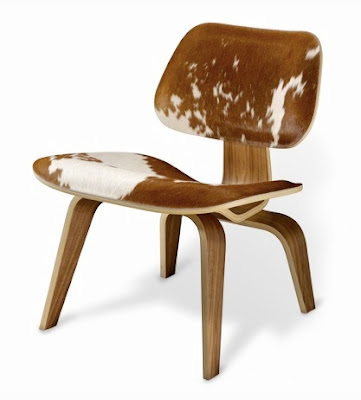
Per Reference Library, "He brought Eames chairs to the toy shop — for a time, Nut Tree was the sole retailer on the West Coast for Eames furniture. He commissioned dish patterns (which are now in the MoMA permanent collection) and brought Dansk flatware into the dining room. Dishes were plated exactly as Don Birrell designed it. In four years, he and the partners had expanded Nut Tree to include a toy shop, gift shop, toy train, airport, its own clothing line and its own design studio. All of this before Alexander Girard's Textiles & Objects shop opened its doors in 1961."

I will add that much of the Nut Tree's whimsical fabulousness predates Disneyland, and definitely predated the "It's a Small World" attraction. And you know who designed several of the legendary Nut Tree's iconic buildings?


Architects DREYFUSS & BLACKFORD: their renown Sacramento architectural firm has a noteworthy portfolio all over Northern California. I've written about them here.


Founder of Tower Records RUSS SOLOMON: Not many people realize that "the largest record store in the nation" started right here, in Sacramento -- four miles up the street from our Eichler Homes neighborhood. Mr. Solomon started the record store in his dad's drug store.


A huge proponent of the local art scene for years, Mr. Solomon is still active in the arts community. You can check out his photography exhibit of local artists through March 4th.

Fellow Sacramentans, it's udder-ly ridiculous not to be proud of Sacramento's history of moo-vers and shakers. When someone calls Sacramento a cow town, don't have a cow. Smile and say, "MORE COW BELL!"

The Tiki Gods Approve


Last month during the kids' winter break, we ran away to Maui and stayed at the delightful Ka'anapali Beach Hotel. As you may know after reading my blog for a while, I am all about tikis (we have several in our backyard); I've been looking for the chance to add to our collection.

For a little background about tikis in Hawaiian history, visit Mythic Hawaii and Ancient Huna.

The tiki gods must have been smiling on us; on our last day, we met master third generation tiki carver, Funaki Tupou. We were so glad to meet him and see his incredible work.


He uses wood from the Monkey Pod Tree and his tiki carvings incorporate ancient Hawaiian symbols. The tiki above with the extended tongue is a warrior. He found a nice home with a family from the MidWest.

We were enchanted by the pair below.  Our son liked the warrior; our daughter, who loves turtles, liked the smiling one. She had just swam with a Green sea turtle in the ocean the previous day. The turtle symbolizes long life and good luck.


Can't wait for them to arrive! Just so happens he visits Sacramento periodically and we will likely order more. We really love his work and are pleased to be purchasing his art directly from him.